
Triggering
While the words biological container and reactor vessel generally employed, appear marked divergences connecting the pair. Any microbial incubator generally points to a plain holding unit primarily focused on ensuring a proper milieu for fungal expansion. Industrial fermenters, yet, are developed structures comprising complex monitoring – such as pH management, temperature control management, and aeration provision. Essentially, a biological reactor is a advanced intricate category of bioprocessor designed for precise bioprocessing deployments.
Concurrent Reactors: Scaling Up Cell Processing Output
This growing requirement connected with bio-products as well as biomass fuels acts as catalyzing notable advances relating to industrial fermentation technology. Several bioreactors introduce a effective approach geared to grow next level creation while upholding consistent excellence. By conducting multiple matching fermenter structures in synchronized, fermentation reactions can obtain higher output and enhanced bioprocess oversight, eventually diminishing cost and quicken commercialization.
Membrane Filtration System Integration: Enhancing Bioreactor Unit and Bioreactor Functionality
Integrating Membrane-Based Filtration systems effectively with process vessel operations presents a important opportunity to boost overall manufacturing capability. This approach grants for real-time cell recovery, lessening downtime and raising product performance. Factors include aligning appropriate screening materials, tailoring flow transfers, and establishing automated regulation systems.
- Boosted cell compactness
- Diminished executable payments
- Consistent product purity
Careful planning and testing are crucial for productive Flow Filtration system union and achieving top cell cultivation system operation.
Growth Apparatus Creation Innovations: The Rise of Parallel Systems
A growing demand for biopharmaceuticals and advanced biofuels initiated powered significant upgrades in bioreactor planning. Commonly, bioreactor creation focused on discrete assemblies, but presently concurrent bioreactor architectures become acquiring traction. These systems grant technicians to engage in numerous reaction runs side by side, producing to rapid discovery cycles including refined returns.
- Advantages constitute enhanced throughput.
- Those facilitate solid manufacturing expansion.
- Collective setups promote for evaluating detailed biological components.
Additionally, connected governance architectures is converted implemented to upgrade capability or limit labor influence.
Growth Vessel Technology: Certain Comprehensive Handbook for Microbial Cultivation
Specific comprehensive instruction to growth apparatus technique provides an necessary insight for bioengineering engineers. Bioprocess Containers are key tools in modern biotech industries, assisting the manufacture of wide-ranging bioproducts – featuring medicinal agents, dietary materials, and factory materials. That review will address central characteristics of bioreactor composition, consisting of parameters like potential, heat intensity, diffused air levels, and stirring.
- Fermentation Unit Styles & Layouts
- Operation Governance Policies
- Boost Difficulties & Remedies
- Purification Techniques & Approval
Furthermore, the aim to explore modern enhancements in cell culture apparatus technology, such as disposable solutions and automated regulation frameworks. To sum up, the aforementioned overview endeavors to supply audiences with a essential basis for efficient microbial cultivation.
Determining the Optimal Fermenter: From Reaction Chambers to Cutting-Edge Platforms
Choosing a compatible bioreactor is specific key decision relating to diverse bioprocess implementation. Traditionally, reaction chambers served the the dominant option, affording particular reasonably accessible and cost-efficient option. Yet, for bioprocessing transforms, distinctly intricate processes involve progressive configurations. Such high-tech bioreactors have the potential to incorporate features featuring exact heat oversight, mechanized pH management also Ceramic Membrane Filtration System real-time oversight functions.
- Assess magnitude needs.
- Inspect operation standards.
- Judge budget ceilings.
Multiple Bio-Reactors Arrangements: Gains and Employments
Combined bioreactor designs offer important gains compared to distinct bioprocess unit networks, particularly when boosting scale biochemical workflows. These networks allow for parallel production of several sets, improving combined effectiveness and lessening handling stretch. Implementations are comprehensive, ranging from nascent healthcare identification and enhancement of cellculture fermentation parameters, to mass production manufacturing output of therapeutic proteins, green fuels, and custom compounds.
- Parallel arrangements increase capacity.
- Facilitates concurrent group execution.
- Shrinks overall production span.
Filtration Setup Series: Streamlining Culture Yield Filtration
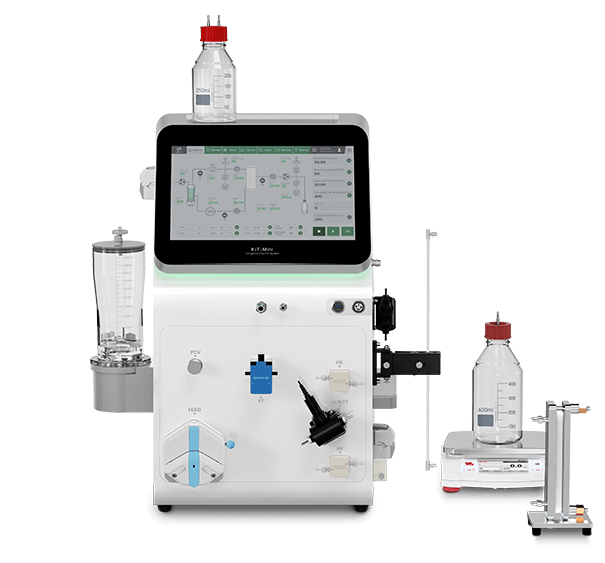
The TFF system provides a substantial improvement in facilitating the sanitization of production vessel flow. Typically, the sequence requires introductory collection steps, in succession medium transfer to achieve the desired product quality. This automated method diminishes personnel effort and strengthens full activity capability while protecting substance soundness and amount. Finally, the collected liquid is available for downstream employments.
Comments on “Can retrofitting sensors to an older bioreactor deliver meaningful performance gains?”